mapk信号通路有哪些

粉丝7.8万获赞19.4万
相关视频
 21:08查看AI文稿AI文稿
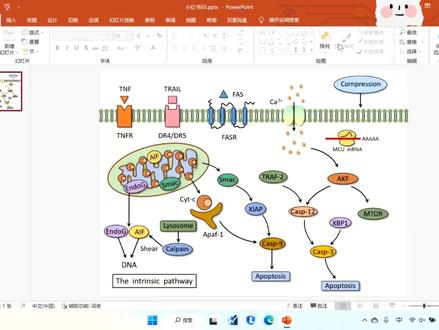
今天我们给大家介绍一下这种简单机制图的绘制方法。我们先新建一张新的幻灯片, 首先我们先绘制这个图形,我们先添加一个矩形的形状, 然后再添加一个三角形的形状,调整一下三角形的方向, 移动到矩形上,然后我们在拆分形状之前,先把这个三角形复制一下,这样三角形就会根治后的缺口重合。我们选中这个矩形和在它上面的三角形, 然后点击形状格式里面插入形状中的合并形状选项,点击拆分形状, 这样我们就可以看到矩形上方有一个三角形的缺口,同理另一个形状也是如此。 先添加一个矩形形状,再添加一个小矩形形状,根据需要调节一下大小。 为了使小举行刚好在大举行的正上方,我们利用形状格式里面对其选项中的水平居中,然后利用刚刚的方法对两个形状进行拆分,然后可以调节一下图形的位置。 还有一个形状是由四个矩形构成,我们先绘制一个矩形,然后按住康筹键进行复制移动,然后选中四个矩形,利用形状格式里的垂直居中和横向分布,利用垂直居中可以使这四 个矩形处于同一水平线,横向分布可以使这四个矩形间隔相同。然后我们再进行这个通道蛋白的绘制,这个是由三个图形组成的,最里面的图层是一个矩形,两边是两个椭圆。我们先绘制一个矩形形状, 然后再绘制一个椭圆,然后按住康戳键复制一个一模一样的椭圆,调节一下三个图形的位置和大小, 我们先绘制基本形状,然后再调节颜色。现在我们绘制图中的线立体,教大家一种最简单的方法,不仅仅适用于线立体,所有图形都可以。我们先把要画的图形复制到我们的 ppt 上, 然后利用形状里面的弧形进行描边。这个形状的好处是到了拐弯点,它会自动变成曲线。我们先对线立体的内部进行描边, 画到最后的时候,我们连接这个图形的起点,他就会变成一个封闭的图形。 我们如果要修改一些细微的地方,我们可以点击这个形状,点击鼠标右键,然后选择编辑顶点,就可以对这个图形进行细微的调整了。 这些顶点中我们不仅可以移动它,还可以删掉或者添加。然后在绘制性立体的外, 他是一个椭圆,我们画一个椭圆,在形状格式排列中的下一一层,选择置于底层,这样我们就可以看到我们刚刚绘制的线里体内部的形状。我们可以根据需要调节椭圆形状的大小, 然后我们在绘制心里体上面的小分子,它是由两个圆形组成的。我们可以点击椭圆形状绘制,然后我们直接在 ppt 上画,那它就是一个椭圆的形状,但我们按住 shift 键进行绘制,它就会出现圆形, 这个圆里面的小圆形,我们可以复制这个圆,然后按住 shift 键,等比例缩小就可以了,调节一下他的位置,使他达到我们想要的效果。 我们也可以选中这两个图形,在形状格式里面选择右对齐和垂直居中,也会使里面的小圆形位于大圆形的右边正中央,因为这是一个整体图形, 然后我们所需此图形的大小不同,所以我们可以将这两个圆形先组合成一个小组合,然后再等比例增大或者缩小, 这样整体图形的形状就不会改变。我们先绘制凝脂双分子层里的内容, 然后再绘制凝脂霜分子层,因为凝脂霜分子层是由很多小个体组成,所以我们先绘制的话,会使很多的步骤卡顿,就不会那么流畅。我们现在先调节颜色,从线立体的颜 颜色开始,点击想要调节的图形,然后点击鼠标右键选择设置形状格式,我们可以填充想要的颜色和线条的颜色,同样的,我们调节一下线立体外部填充的颜色和线条, 然后我们调节一下线粒体上面这种分子的颜色,它是两个圆形不同颜色组成的,我们调节一下它的颜色和线条, 这就是我们想要的效果。因为线一体上这个分子大小跟外部这个分子的大小是不一样的,所以我们可以直接对这个分子进行复制,按住康筹复制移动,然后按住 shift 键等比例缩小,然后我们把它移动到想要 的位置, 然后我们再进行这种分子的绘制,这是由一个简单的椭圆组成的, 我们点击椭圆形状进行绘制,调节到相应大小,然后可以在 ppt 的右方调节它的颜色,填充和线条。 如果我们直接在椭圆里面输入内容的话,就会导致字体设限制, 这种情况下我们可以直接插入文本框,然后在文本框里面输入想要的内容,把文本框一致,图形上面通过键盘的上下左右来调节内容的细微位置,使他位于形状的正中央。其他类似 分子也是一样的操作,先给大家视力几种分子,然后为了节约时间,后面的相同内容的分子我就会直接复制粘贴过去喽。 如果是表达相同的分子,我们可以直接复制之前的移动到想要的位置。 这个 aif 分子我们也可以直接复制过来。为了匹配左边分子的大小,我们可以把 aif 的那个形状大小调大一点。为了使效果更加立体,我们可以给椭圆形状添加 阴影效果,我们也可以在阴影中调节大小,模糊等细节的调节可以使阴影效果不同。 另外两个形状和线立体,我们也可以调节一下效果。现在绘制一下这个图形,利用我们刚刚简单的方法,用那个弧形形状对它进行描边, 然后我们对他的顶点进行调整, 然后我 我们设置一下这个图形的颜色和线条,再设置一下它的效果,使它更加立体。 这种分子的设置外面是一个圆角举行,同理我们选择圆角举行进行绘制, 然后设置它的形状,填充线条,还有阴影效果。 我们也可以直接复制之前做好的图像,因为这样我们就可以只调节颜色和大小就可以了。 为了节约时间,我们就把类似图形直接复制过来,然后我们再教大家这种弯曲箭头的制作, 然后我们再设置一下之前制作的图形颜色,线条和效果。 这个通道蛋白的颜色是渐变的, 我们把它的线条取消,然后选择渐变的颜色。这个渐变光圈里面还可以调节渐变的位置。 把之前的形状设为一个组合,就可以根据需要设置他的大小。 然后我们制作凝脂双分子层和它内部的颜色。我们先新建一张幻灯片,然后在这个新幻灯片里面进行凝脂双分子层的绘制。 凝脂双分子层的每个小分子由两个相同的分子构成,上下分布。每个相同的小分子由一个圆形和两条竖线组成。我们先会这个小圆形, 然后再画两条竖线,改变一下竖线的颜色,把这两个竖线组成一个小组合。 把这两个竖线置于最底层,让这两个小竖线跟圆形水平居中, 然后再使这两个小竖线跟圆形组成一个小整体, 然后复制移动。这一个小整体移动到他的下方,然后点击水平居中,使这两个分子位于同一条垂直线上,然后下方的分子利用形状格式的旋转功能里的垂直翻转, 这样一个小分子整体就形成了。我们把这两个小分子设为一个整体,然后进行复制移动。我们可以先不考虑分子之间的距离 和是否在同一水平线上,我们之后会调节 把这些分子大约分布满幻灯片的宽度,之后选中全部分子。我们利用对齐里面的顶端对齐和横向分布, 这样所有分子就在同一水平线上,且间隔相同了。如果还有空白处,我们可以适当添加一两个小分子。 把所有的小分子设为一个整体, 这样便于移动。我们可以先移到原来的幻灯片看看效果, 因为凝脂双分子层里面要设置不同的颜色,为了颜色衔接,我们在凝脂双分子层下面再设一个小的矩形,这个矩形要更换灯片的宽度相同, 把这个颜色设为比凝脂双分子层的颜色淡一点,但是比凝脂双分子层内的颜色深一点。 同理,凝脂双分子层内的颜色也是这样设置的。 先画一个鱼幻灯片等宽的矩形,然后再设置颜色, 然后我们再添加一些文字的内容,插入文本框输入内容。 这个形状上面的三角形,我们也可以直接利用前面的三角形把颜色改变一下就可以了。 然后这四个矩形之间的连线,我们也可以利用之前的弧线进行绘制, 然后再设置 一下它的形状和宽度,我们要把这个线条设为最底层的图层,这样就可以把它设在四个矩形的下方,只露出需要露出的部分。 我们把线离体往下移一点,因为等一下上面还要放磷脂双分子层。 我们先把下方文字的内容添加进去,把字号调大一点,文本框也是可以添加他的边框的。 然后我们进行箭头的绘制,直线箭头直接利用箭头形状就可以了, 弯曲的箭头我们也可以利用弧形进行绘制,我们绘制的时候那个线条上面是没有箭头的, 但是我们可以在幻灯片右方线挑选像里结尾箭头类型里面设置箭头和箭头的粗细。 如果所需弯曲箭头的幅度大致相同,我们可以直接复制之前绘制的弯曲箭头,然后再调节一下他的方向和大小,如果方向不同,我们可以通过旋转来调节。 我们也改变一下直线箭头的宽度和箭头类型。 然后现在我们把磷脂双分子层的这个整体复制过去。 如果想把这个整体往上移或下移,我们可以直接调节凝脂双分子层内的矩形形状的大小,然后把整体往上或往下移。 给通道蛋白也添加一个箭头,设置一下它的宽度和箭头类型等。 然后我们可以移动左边椭圆和右边椭圆的位置,使箭头刚好位于两个椭圆中间。根据通道蛋白的大小调节一下箭头的长度。 如果很难判断箭头是否在同一垂直线上,我们可以通过形状格式里的箭头大小把形状格式设置为零。 然后我们绘制这些小分子。我们先点击椭圆,按住 shift 键绘制小度圆形,然后再跟之前调节通道蛋白的颜色一样,把线条改为无线条,把它颜色调为渐变。 为了使圆形更立体,我们也可以增加它的效果。然后按住 shift 键复制移动到我们所需分子的个数和位置, 然后我们绘制最后一个图形,这是由上下两个大小不同的椭圆结合而成。我们先绘制一个椭圆,然后按住这个椭圆进行复制,并且使这两个椭圆水平居中, 然后再利用形状格式里面插入形状中的合并形状的结合选项,然后这两个椭圆就变成了一个整体,然后调节它的颜色,线条效果等。 然后那个红色就是直接在这个图形上面画一 条横线,把它的高度设为零,就可以保证这条直线是中式水平的,然后调节它的线条的宽度、颜色和位置。 至于图形里面这个弯曲的线条,它也是通过弧形绘制而成,然后调节它的颜色和宽度, 我们再增加所需要的文本内容。 凝脂双分子层内部的小分子和 akf 中间也有一个箭头,我们直接复制一个同方向的箭头,然后再进行一 动, 再把所需内容添加进去, 这样我们的图形就绘制完成了。
374一稿中刊科研绘图约稿 00:53
00:53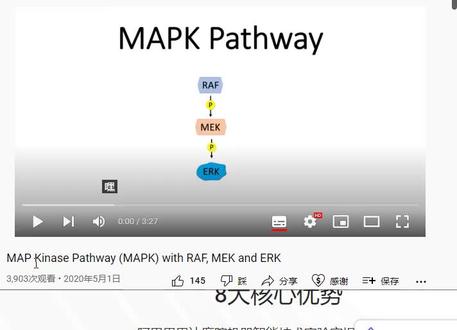 03:39查看AI文稿AI文稿
hey friends and welcome to today's talk today we will address the map kindness pathway which involves, rough, meg and irk as some of the main proteins they are also known under a different name rough for example is also known as the map kindness kindness kindness mec is known as the map kindness kindness and irk is literally the map kindness the map kindness pathway will in the end lead to the transcription of genes involved in cell proliferation and cell survival when out of control the map kindness pathway can easily lead to cancer so all three proteins mentioned here are kindnesses what is a kindness? a kindness to make it short is an enzyme which can transfer a phosphate group the kindness here will transfer a phosphate from a donor, which can be atp for example like here and then it can phosph for relate and accept a protein but let's start at the beginning how is this whole process activated first, we need a stimulus growth factors here can bind to our receptor tyracing kindnesses and the binding leads to dimorization this diamond can then get transforced related and this allows for the docking of proteins these proteins here grb, two and sos can then lead to the activation of ross ras has now bound gtp which makes ras active and ras activates a whole for relation cascades here we see a scaffold protein in green this scaffold protein will facilitate the phos relation cascade by bringing the proteins in closer proximity, so ras will activate rough, which we also know is the map kindness kindness kindness so the map kindness kindness kindness will false relate the map kindness kindness now which would be mack and meg can then lead to the phospho relation of irk which is our map kindness so we have a phosph relation cascade one of these proteins will phosph relate the other one downstream we can see that here again rough gets activated first rough then phosphor laids meg and meg phosphorylates and that activates eric eric can now leave the complex and enter the nucleurs to activate transcription factors so let's have a closer look into the nucleus irk will now activate a transcription factor here and this one will join to the dna and promote the transcription of genes this up regulation in transcription targets genes which are involved in cell proliferation and cell survival so long story short the map kindness pathway is a phosphorylation cascade which in the end leads to the activation of transcription factors to promote cell proliferation and cell survival that was the overview about the map kind this pathway i hope it was helpful for you otherwise i'm out thank you very much for watching bye,
16卢娜医学翻译 07:03
07:03 09:41查看AI文稿AI文稿
to make a multicellular organism cells must be able to communicate with one another and to do it cells often send out tiny chemical signals that act on the receptors of other cells signals can be classified according to the distance between the signaling cell and the target cell autocrine signals are produced by a cell and go to its own receptors so the cell sends a signal to itself parachrine signals are produced by a cell and go to target cells that are nearby and endocrine signals are produced by a cell and go to target cells that are further away examples of these include hormones that are secreted into the bloodstream as well, as cytokines that can be released at the site of injury and act on the brain to cause a fever signaling molecules or leggins can be hydrophobic meaning that they tend to repel water or hydrophilic meaning that they tend to stay in water hydrophobic signaling molecules can't freely float in the extra cellular space, so they're brought into the target cells by carrier proteins hydrophobic molecules can diffuse across the cell membrane and bind to receptor proteins inside the target cell either in the cytoplasm or in the nucleus most signal molecules are hydrophilic, so they can freely float in the extracellular space to reach the target cells, but are then unable to cross the cell membrane so to pass on the signal hydrophilic molecules bind in receptors on the cell surface these receptors are transmembrane proteins with an extra cellular end that binds to the ligand and an intercellular end that triggers a signaling pathway inside the cell we can think of the cell signaling pathway in three stages, the first stage is reception, which is when the target cells receptors bind to a ligan, it's like a key fitting into a lock then there's transduction which means that the receptor protein changes in some way and that activates intercellular molecules the second messengers, the third stage is the cell's response to the signal zooming into these transmembering receptors there are three major classes g protein coupled receptors, enzyme coupled receptors and ion channel receptors g protein coupled receptors are seven past transmembrane receptors these are like really long proteins that have one end that sits outside the cell and binds the ligan then the snake like protein dips in and out of the cell membrane set in times and finally ends on the inside of the cell the end of the g protein coupled receptor that's within the cell activates interest cellular proteins called guanny nucleotide binding proteins or g proteins g proteins are made up of three subunits called alpha, beta and gamma sort of like a flower with three petals, the alpha and the gamma sub units are anchored to the cell membrane and keep the g protein right next to the receptor g proteins bind to guanazine diphosphate or gdp when they're inactive when the alpha subunit is bound to gdp, the three subunits stay together, so the flower is closed but when the ligan binds the g protein coupled receptor changes its shape and this allows the g protein to release gdp and bind gtp instead activating the protein when the alpha subuna is bound to ptp, the alpha subunit separates from the beta and gamma subunits like one pedal opening and separating from the others, when that happens the alpha subunit is free to interact with other proteins it stimulates some well inhibiting others, but to act on other proteins the alpha subunit turns gtp into gdp and when that happens the three subunits come together again the flower closes and the g protein is turned off overall there are three types of g proteins, gq, g, i and gs and each one stimulates and inhibits a different set of enzymes and molecular pathways the gq protein activates the enzyme phospholipes c, which is found in the cell membrane phospholipece c then cleaves a phospholipid called phospho title and nasa all four five bis phosphate into isosadal tris phosphate and diocel glycerol isosadal tris phosphate is soluble and diffuses freely through the cytoplasm and into the endoplasmic criticulum where it opens up calcium channels, since the calcium concentration is higher in the endoplasmic riticulum than in the cytoplasm calcium flows out of the endoplasmic riticulum to the cytoplasm the increased calcium concentration in the cytoplasm changes the electrical charge of the cell and can lead to depolarization meanwhile diocel glycerol remains attached to the cell membrane and binds to the enzyme protein kinese c, which also relies on calcium to fully activate once calcium levels in the cell go up protein kinese sees starts to activate proteins by adding phosphoral groups to them next is protein g s which stimulates the enzyme identilate cyclace activated identilate cyclace takes adenosine tri phosphate or atp and removes two phosphate molecules transforming it into cyclic identizen monophosphate or c, a, m, p camp moves throughout the cytoplasma and binds to the enzyme protein kindness a protein kindness a has two parts, a regulatory subunit and a catalytic sub unit and camp specifically binds the regulatory subunit of protein kindness a when camp binds, it makes the regulatory subunit dissociate from the catalytic sub unit, it's kind of like pulling the pin out of a fire extinguisher allowing it in this case, it being the catalytic subunit to do its job so after dissociating the catalytic subunit of protein kindas, a is free to phosphorulate target proteins that trigger a cellular response finally, there's the protein g i which is also bound to a dental its side place but in this case it inhibits it causing negative feedback on protein gs this is particularly important in helping to inactivate cells next are the enzyme coupled receptors they're usually single pass transmembrane proteins meaning that they have only one transmembrane segment and their intracellular end has intrinsic enzyme activity in other words, enzyme coupled receptors have two parts, one domain is the receptor and the other domain is an enzyme each domain has a separate function like on a swiss army knife that's composed of both knife and scissors the enzymatic domain is usually a protein kindness that phosphorulates the receptor domain now there are three main types of enzyme coupled receptors based on the amino acid at which the receptors get phosphorulated the first group are the receptor tyrazine kineses these are the most common enzyme coupled receptors and there are many sub families receptor tyrazine kines are generally molecules that can't phosphorulate their own tyrazine sidechains when a ligan binds two receptor chains come together and dimorize and they cross phosphorulate one another at multiple tyrazine residues this triggers a confirmational change that creates high affinity binding sites for the second messengers, which can also be phosphorulated and activated triggering the signaling path next are the tyrasine kinase associated receptors, which work in nearly the same way as receptor tyrazine kineses and their name even sounds almost the same, the key difference is that they have no intrinsic enzyme activity instead they're associated with cytoplasmic tyranine kineses when the receptors bind, they're liganed the sadoplasmac tyrosinkinis is phosphorulate various target proteins to relay the signal finally, they're the receptor sering three indian kineses and they have a searing three indian kindness domain on their intracellular end there are two classes of these receptor serum three indian kindnesses type one and type two which are structurally similar ligan binding brings the two together so that the type two receptor can follow phosphorulate and activate the type one receptor which in turn recruits and phosphorulates various target proteins to relay the signal finally, there are the ion channel receptors which are generally closed but then they open up once they bind a specific ligan they allow ions like chloride calcium, sodium and potassium to passively flow down their gradient this leads to a shift in electric charge distribution inside the cell triggering a cellular response so they must bind to transmembering receptors which have an intercellular end that triggers a signaling pathway inside the target cell there are three major transmember in receptor classes g protein coupled receptors, enzyme coupled receptors and ion channel receptors。
108卢娜医学翻译 03:04查看AI文稿AI文稿
你好,我是杨能能,我们今天再来看一下白洁素时期借到的信号通录之 pi 三 k akt 这个信号通录, 那这个信号通录呢?他是调控细胞增值和凋亡的一个关键通录,他和胃癌的发生、增值、转化、凋亡、内药性等等相关。那这个通录激活之后,他可以促使肿瘤转移为环境发生改变,从而呢就有利于肿瘤的转移,影响患者的愈后。 那这个 ps 三 k 和 akt 是什么呢? ps 三 k 呢?它代表的就是磷脂纤基醇三剂酶啊,它是一种酶类蛋白质, 它的基本功能就是磷酸化积醇,磷脂分子将它们转变为不同的磷脂纤积醇形式。啊,这个呃积醇呢,其实就是我们大家都知道 这个维生素 b 八,那磷脂呢?它是一种复杂的脂质分子,它包含一个疏水的脂肪酸尾部和一个清水的磷酸头部,而磷酸头部当中的磷酸集团,它可以和肌醇结合,就会形成肌醇磷脂。 那肌醇磷脂呢,其实就是一类含有肌醇的磷脂类分子,那这个 akt 呢?它也称为磷酸肌酶壁,那它是一种重要的细胞信号传导蛋白肌酶。 好,那我们接着就来看一下白洁素时期是怎么激活 p i 三 k a k t 这个信号通录的啊。首先呢就是白洁素时期,它会激活磷脂纤基醇三氢酶,那这个磷脂纤基醇三氢酶呢,就可以使细胞膜上 积醇发生磷酸化,那这个磷酸化的过程当中呢,涉及特定的这种化合物,比如说磷脂纤积醇四五二磷酸,也就是说这个 pip 二啊,他会被磷酸化, 那他就会生成磷脂腺积醇三四五三磷酸酯,也就是 pip 三啊,那这个 pip 三呢,就会作为一个第二形式激活下有的 akt, 然后使他转移到这个细胞膜上, 那在这个位置,那 a k t 就会和磷酸肌醇依赖性蛋白酶一和磷酸肌醇依赖性蛋白肌酶二结合,那并且会磷酸化他们的特定的危点,所以他的整个过程呢,就是 白洁素时期,他会激活磷脂先积醇三积酶,那积醇呢,就会发生这个磷酸化,将 pip 二转化成 pip 三,那 pip 三呢?在作为一个第二性时, 激活下游的 a k t, 然后就产生了一些细胞效应,那就会促进细胞的这些增值、迁移、分化等等。好,这样就会促进了这个癌症的一个发展。好,今天的分享就先到这里,我们下期再见,拜拜。
54🔵杨能能 03:10查看AI文稿AI文稿
你好,我是杨能能,我们今天要分享的是白洁素时期借导的信号通路之和因子 kb 信号通路。 那我们前两天有分享过白洁素时期呢,他是辅助性 t 淋巴细胞所分泌的一种细胞因子啊,那么白洁素时期他与受体结合之后,会激活下一步的相关信号通路啊,参与炎症反应,或者是一些肿瘤的发生发展过程。 那么今天呢,就主要来看一下白切素十七活化和因子 k b 这个信号通路。 那么和因子 kb 信号通路呢?他参与细胞凋亡,免疫应答,还有像应激反应等这些病理过程,也就是这个和因子 kb 信号通路,他是戒导炎症的一个非常经典的信号通。 那白激素时期是怎么激活和因子 k b 型号通路的呢?那白激素时期,首先它会与细胞膜上的受体结合,那结合之后呢,就会引起受体构形的改变,从而激活 e 型 k b 激酶, 那这样的话就会使一型 kb 蛋白磷酸化,也就是说这个一型 kb 蛋白被就他这个结构和功能被改变了啊。随后呢就会连接上这个小蛋白泛素啊,发生一个降解, 那这样这个异形 k b 蛋白降解之后,就会使得和因子 k b 呃被这个呃就是解脱出来,那他解脱出来就会使他当中的这个液压机 p 五零和 p 六零啊相结合,形成一个二具体啊,从这个报纸当中释放出来啊,这样他俩就会迅速的移动到细胞核,与目的基因结合啊,从而呢就会呃 就是改,就是就会使这些基因发生一个转入,从而去改变细胞的一个功能, 这就是它的一个八节缩时切去激活呃和因子 k b 信号通路的这样一个过程。 那么这个和因子信号通路呢?他与胃癌的关系非常密切。那有研究表明,白结素时期,他可以非常明显的去促进这个细胞分泌白结素六和白结素八,从而去提高这个和因子 k b 以及它的一个磷酸化的水平。那另外呢,还有研究表明,白激素十七 a 能够通过和因子 k b 信号途径上调机制金属蛋白酶二和机制金属蛋白酶九的表达啊,去影响到这个细胞外 机制。就也就是说啊,可以影响到这个啊,肿瘤的一相关的一些微环境的啊,一个变化啊,从而呢影响胃癌细胞的一个迁徙和 嗯,迁移和侵袭。好,今天的分享就先到这里,拜拜。
37🔵杨能能 01:50查看AI文稿AI文稿
高分上岸学长讲解这个信号通路, cmp pk a 信号通路我们刚才讲我们大部分常见的激素都是一种含氨基素,这种含氨基素就是要么是呃蛋白质类的激素,要么是 多肽类的激素,这种激素最常见的就是胰高血糖素和肾上腺素,他们这两个激素,他们的作用方式是首先激素作为配体,也就是第一性使过来,和我们刚才的忌蛋白藕连收体相结合,通过我们刚才所讲的机制去 作用于的效应为是线杆酸环画眉。当记二法雅姬激活了线杆酸环画眉之后,线杆酸环画眉会催化 atp 环画 生成 c amp, 这个 c amp 就作为整个信号通路的第二行驶,再去激活下游的效应酶,这个一般下游的效应酶指的是 pka, 就是蛋白激酶 a, 这个蛋白激酶 a 他再去磷酸化下游的一些 代谢物去调控细胞的整体的代谢情况,或者是这个 pka 直接通过河孔进入细胞核,他作为一个转入因子去调控基因的表达,这个就是肾肾上腺素、胰高血糖素,他最后 引起细胞代谢状态的改变,或者是调控基因表达的一个机制,就是通过 cmp pka 信号通路完成的。 cmp pka 信号通路是既 蛋白偶然身体戒倒的最常见的一种信号通路。更多慈禧学长学姐考点讲解,关注生意考研!
172湖南生壹教育科技有限公司 00:42查看AI文稿AI文稿
做技术研究的小伙伴来,要和精英信号通路打交道,为了搞清楚各种关系,不得不查文献。而一大堆英文文献又看的人心烦气躁。壮而老三, 你会怎么办?长文先看嘛,问师兄师姐,可是人家也要忙啊!课题师傅助手的解锁神器,可以很轻松的把你从难题中解救出来哦。你只需要输入关键词,中英文均可一键查询, 统就会从海量文献中查出与三一线乳腺癌相关的精英。九八百二十八个信号通路四十四个。 nice! 这里是推机,专治于分享严肃科研、科学偷玩的实用技巧。
69科研者之家 00:18
00:18


