projectile是什么意思
大家好, projectile 这个词是个专有名词,我们在高中的时候应该见过他。大家回想一下,他表示抛射物。 我们可以通过拆分词根词队来记忆。他。前面有一个 pro, 表示向前更进一步的意思,比如说我们这款叫做什么什么 pro, 他要比他的原始版本要更先进一点。 中间是 z、 e、 c、 t, 表示投掷或者扔的意思。我们在中学中经常会看到一个仪器,它写的是 project, 表示投影仪。 所以两个词跟连在一起,就是把什么东西投至到前面。 for jackson 抛射物。我们在高中力学中都会学到一个运动,表示抛物运动。怎么说呢? 就这个词 projectile motion。 大家回想一下什么叫抛物运动,如果忘了呢?可以回想一下 angry birds, 愤怒的小鸟就摆只鸟扔出去,让他去撞击前面的障碍物。就是抛物运动。 有三种抛物运动的模式,大家需要记忆一下。一个是竖直抛物运动,后面的 project motion 不用变,前面加一个 merchico protectile motion。 如果是平抛运动呢?就是 horizontal projectile motion。 如果是斜抛向上抛呢?表示啊,应该怎么说呢? alik projectile motion 大家都记住了吗?

粉丝3800获赞5.1万
相关视频
 10:42查看AI文稿AI文稿
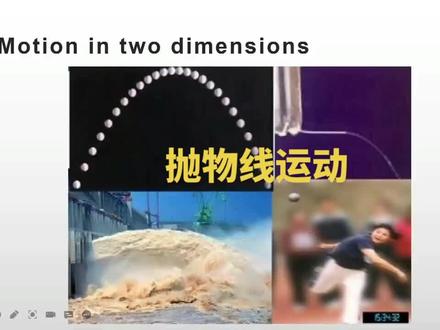
好,今天我们一起来研究一下 motion in two dimensions, 也就是二维平面运动。在此之前呢,我们所接触到的都是一维运动或线性运动,也就是物体只在一条线上或相反的两个方向上进行运动。 那么这样的运动我们叫一维运动。但实际生活中间难免我们会碰到二维或者说平面运动, 比如说向小球抛出的时候,或者是水流出的时候,他们的运动是在两个方向上进行的,或者说在平面内进行的。 那么这样的一个运动呢?我们应该怎样去进行研究呢?我们今天来讨论其中的一个运动,叫做 project time motion, 也就是 抛体运动,那么顾名思义,抛体运动就是把一个物体抛出去的运动。那么我们来看一个非常简单且经典的一个例子, 现在呢,我们可以看到在这个动画里有一个大炮,那等一会呢,通过发射我们会看到有一个物体从大炮上抛出, 既然要让他抛出,意味着他要有一个初始速度。好,那么我们现在可以看到他在空中就形成了这样的一条蓝色抛物线。那这样的一条线所构成的运动, 首先我们可以看到它一定是包含了两个方向上,水平方向上既往前走了,竖直方向上又往下走了,所以它包含一个水平方向的运动和一个竖直方 方向的运动。第二,我们可以看到它显然是一条曲线,所以这样的一个运动它不再是一个直线运动,而是一条曲线。 第三,我们再来看一下关于这个物体在空中的受力,如果我们不讨论空气阻力的影响,不讨论空气阻力的影响,那么我们来分析一下他的受力, 同样是抛出,我们来看一下整个物体依然是呈现出了一条曲线,或者说抛物线, 那么这个地方呢?我们来显示一下他的受力,我们可以慢速来看一遍这个力,我们会发现是一个向下 下的,并且下边为 fg 的力,可能跟这个球在动画上稍略微有一点偏移,大家将就看一下,那么再看一下这个力,这个力是不就是这个物体所受的合力,方向是竖直向下的? 那当一个物体在空中不受空气阻力的情况下,这个力唯一有可能来自于什么呢? 来自于这个物体所受的重力。所以我们其实可以得到这样一个结论,就是当一个物体抛出或在空中运动的时候, 不考虑空气阻力的情况下,他唯一受到了这个力或他受到的合力就是他自身的重力。好,那么这 我们其实就可以得到 project motion 的几个特点,分别应该是,第一个 motion of a body following a curved path, 也就是他的运动其实是一个曲线运动。 第二个, it's made up of horizontal and vertical components。 那么我们刚刚在图像中间其实已经看到了,它既包含了水平方向上的运动,又包含了竖直方向上的运动,所以是一个二维的平面运动。 第三个 movement while an object is acted upon by gravity。 那么在不考虑空气阻力的情况下,唯一或受到的合力就是他的自身重力。 ok, 那么这就是我们来讲的这个 project time motion 的一些特点,那如果我们要去研究一个物体做抛物线运动的速度特点或位移特点呢?我们其实会发现相比于异闻运动来说会有一些困难, 还是回到我们刚刚的这样的一个动画里,我们可以来看一下,如果对对应这样一个动画,我们去讨论一下他的 velocity, 也就是速度的话,我们其实可以看到啊,这里会显示一个速度项链, 那么这样的一个速度向亮以绿色箭头来表示,我们可以看到他的箭头方向代表的就是速度方向,而箭头长度呢,代表的就 就是速度大小。那么观察一下对应的这个箭头方向,它其实是沿着运动的切线方向,而再观察一下它的速度大小,我们会发现这个绿色箭头的长度也在不断变化。 换言之,这样的一个抛物线运动,如果我们想要去研究它的速度,那么这个速度大小和方向都在不停的发生变化,这就会对我们研究它具体的或者各个时刻的速度带来一定的困难, 那么有没有什么好的办法呢?我们刚刚其实讲到了这个抛物线运动的特点是什么呢?它是由一个水平方向的运动 和一个竖直方向的运动来共同构成的,所以当我们去观察这个速度的时候,我们能不能也从这样的一个角度, 就是水平方向的运动叠加了竖直方向的运动,构成了最终的抛物线运动,这样一个角度来理解这个速度呢,其实一样也是可以的。 那么任意时刻的速度,我们在图像中间其实可以看到他用箭头以及切线方向表示了出来, 而这样一个切相的速度我们其实可以理解为或者说分解为一个水平方向的分速度 bx 和一个竖直方向的分速度 b why? 换句话说,任意时刻对应的抛物线的真实速度,我们可以从一个水平方向的速度和一个竖直方向的速度叠加来进行得到, 所以我们还可以得到他们之间的数量关系,也就是这个速度大小就应该等于 vx 平方加 vy 的平方开根号。 那么这就提供给我们一个新的思路,如果我们能够研究出来 vx 也就是水平方向的速度变化规律,能够研究出来述职方向 vy 研究他的变化规律,那么通过合成我们是不是就可以得到任意时刻他 真实速度的变化规律了呢?那这样来说的话,比直接去研究这个速度要容易的多好。那么这其实我们就有 这样的一个基本研究思路,就是我们分别要去研究他的水平方向和研究他的述职方向, 那么这里我们分别来看一下他水平方向和数值方向的运动特点。首先我们要用到牛顿第二定律,也就是 f 等于 ma, 那么我们可以看到水平方向先研究它的合力。由于整个物体在空中只受一个重力,在没有空气阻力的情况下,意味着水平方向是没有力的,因为竖直方向的力 才是那个重力水平方向如果没有合力,意味着水平方向加速度 f 等于 ma 的 a 是等于零的,那么也就告诉我们 水平方向做的是一个 constant velocity 的运动,也就是匀速直线运动。 同时我们再来看一下竖直方向,在空中这个物体一直会受到一个重力,而这个重力呢,就是竖直方向上的合力,所以我们说 resultant force equals to weight。 那么这样一个重力提供了一个大小为计,也就是自由落体加速度的这么一个数值,那么数值方向上的这个合力, 也就是重力提供了一个向下的自由落体加速度。所以在竖直方向上,物体做的是一个云变速运动,或者说加速度不变的运动, 从而我们其实可以很容易的得到他水平方向和数值方向上的运动规律。那么知道了这两个方向上的运动规律,我们就可以在任意时刻去合成他的真实速度。 但我们还要记住一点,它是既包含水平方向,又包含竖直方向的运动。 现在我们人为的从两个角度去分别探究了他的对应规律,那那么这两个方向连接起来的那个物理量是谁呢? 其实对这两个方向来说,对应的时间是相同的,水平方向的运动时间和竖直方向的运动时间是联系这两个方向的重要物理量,这一点是我们需要记住的。 那么知道了水平方向和竖直方向的运动规律,我们就可以采用分别去分析的方法,最后再合成它整体的一个运动规律,这就是我们研究抛体运动的基本思路。
53同桌Zoe 00:41查看AI文稿AI文稿
你知道什么是投射效应吗?投射效应在我们的日常生活中非常常见。比如在天气变化时,许多母亲会立刻为孩子添加衣物,即使孩子并不感到冷。母亲会说 这天气这么冷,你怎么能说不冷,快加衣服。这其实是一个典型的投射效应的例子,母亲把自己的感觉投射到了孩子身上。投射效应是指将自己的特点归因到其他人身上的倾向。人在认知和对他人形成印象时, 以为他人也具备与自己相似的特性的现象。把自己的感情抑制特性投射到他人身上,并强加于人,即推挤其人的认知障碍。
 11:52查看AI文稿AI文稿
hello, physicists today we are going to be revising projectile motion well, let's get started let's start with the fact that in projectile motion, the vertical and the horizontal motion of a projectile are completely independent what does that mean in practice? let's do a little thought experiment? first off, we're going to drop a ball from a desk with no horizontal velocity and also we're going to drop a ball from a desk with some horizontal velocity as indicated by this vector over here in those two experiments, the vertical and the horizontal component of the velocity are completely independent this means that for instance the vertical component of the velocity both on the left and on the right are of exactly the same length in practice this means that both objects are going to hit the ground at exactly the same time the ball will be experiencing a constant acceleration in the vertical plane and this will be pointing straight down towards the center of the earth, the horizontal component of the speed will remain and changed and that is of course if there is no air resistance or other horizontal forces now, let's have a go at a few problems regarding projectile motion first off, let's imagine that we're firing off a projectile at a speed of 10 meters per second at an angle of 35 degrees, let's find the vertical and the horizontal components of the initial velocity, we're going to start off by resolving the 10 meters per second vector into an adjacent, a horizontal component and an opposite a vertical component, the vertical component of the velocity we're going to call uy and the horizontal component of the velocity we are going to call ux now due to trigonometry, our vertical component will be equal to our hypotenuse, which is 10 multiplied by the sign of the angle, which is 35 degrees and our horizontal component ux will be equal to our hypotenuse, which is 10 times the co sign of the angle, which is 35 degrees and if we plug those values into a calculator, we're going to get the vertical the vertical initial velocity to be five point seven four meters per second and the horizontal initial velocity to be eight point two meters per second when our projectile is flying, there's only one force, which is acting on it and that is the weight mg, which is acting straight down in practice this means that only the vertical component of the velocity is going to change, because there are no horizontal forces once again assuming, there is no air resistance present so in practice, our vertical component of the velocity will initially be decreasing as the projectile is going up as soon as it reaches maximum height, it will be zero because the ball will no longer be going up on down, and there will start to increase again as the ball is starting to fall on the other hand our horizontal component of the speed will remain absolutely constant in a diagram, the situation will look similarly to this let's focus first off on the vertical component, only so gravity is acting straight down the weight is acting straight down which means that our vertical component is decreasing reaches zero at the maximum height then it increases again until it reaches the same values before when the ball hits the ground our horizontal component ux though remain exactly the same length throughout this experiment throughout this projectile motion once again assuming there are no horizontal forces such as air resistance for instance let's calculate the maximum height of this projectile in order to do so we're going to be using the suvar equations we're going to apply them in the vertical plane the most appropriate equation to use to calculate the maximum height of a projectile that made different ways but the one which i'm going to use is the good old equation that v squared the final velocity squared will be equal to use squared plus two as and i'm going to be applying that for the region between here and the maximum height here we know that the at maximum height the vertical velocity is equal to zero and this equation will be applied in the vertical plane so i'm going to leave some subscripts over here to show that this is the final vertical speed and this over here is the initial vertical speed once again at max height put it right over here at max height v y is equal to zero this means that my equation then becomes zero is equal to u y squared plus to a s where s will be my maximum height? i can then just rearrange essentially for s and this will give me minus uy squared is equal to to a s like so and s will be equal to minus uy squared divided by to a we've already calculated our ui if we haven't, we can easily really find it by 10 sign of 35 so i'm just going to write down the the expression in this case just in case you guys are solving a similar problem so this will be minus ten sign of 35 and then all of this is square or what happened with the bracket here all of this is squared and we're going to be dividing this by twice the acceleration because we are going against the weight our g will be negative, so be negative acceleration so it will be minus 9.81 diving us one point six eight meters of a maximum height additionally, let's also calculate the horizontal range of the projectile this is the horizontal distance between the point in which the projectile is fired off into the sky and the point at which it lands on the ground in order to calculate the horizontal range we can use the fact that the horizontal velocity remains perfectly constant and we've already calculated this as 10 cosine of 35, which is 8.2 meters per second so what we can do is just use simply? the fact that distance is speed times time so our range is called x so i can just write down that x is equal to our horizontal speed or horizontal velocity which is ux multiplied by the time at which the projectile is in the air we already know the horizontal speed, but we don't know the time let's figure it out in order to calculate the time t we could use the fact that the vertical velocity turns zero at maximum height so we can use the equation that v is equal to u plus a times t for instance and this equation is applied for the vertical components only so i'm gonna say that the subscribed why you subscribed why? and this is not the time for the full projectile to go from here to here, but it's only for it to reach this point up here so essentially, it's half the time so i might even give it a little subscribed as t half, so that i'm absolutely clear that i'm gonna need to multiply this time by two later on okay well, we know that at max height once again so at maximum height v y is equal to zero so this means that our equation will then become zero is equal to ui which we already have the value of u which is ten times sign of 35 degrees plus a t then t is half the time really and we can just rearrange for t half so t half will be equal to minus ten of sign of 35 divided by a and our acceleration here is going to be minus nine point eight one meters per second because the ball is going upwards until it reaches maximum height in other words it is going against the gravitational force so this will be with a negative sign over here, we are going to get no point five eight seconds for the time for the object to reach essentially the maximum height so if we multiply this by two, we are going to get so the time t will be equal to twice that so let's write twice t half which will be equal to about one point one seven if we're avoiding any rounding aerosin if we just type this directly into our calculator seconds like so this will allow us to directly calculate the the range so we can do that now our range x will be equal to ux our horizontal speed which is 10 times the co sign of 35 degrees multiplied by the by the time, which is one point one seven seconds notice that i'm using the cosine values here rather than just eight point two simply to avoid any potential rounding errors further on in the answer and if we put that into a calculator, so let's do that there'll be ten times the cause of thirty five times one point one seven this is going to give us a range of nine point six meters up to two significant figures okay, folks those were some of the main points about projectile motion on the a level specification i'm hoping that you have found this video useful if there are any questions you know what to do please leave a comment and thank you very much for watching。
 01:31查看AI文稿AI文稿
一分钟看懂牵引式火炮发射原理。一百零五毫米牵引火炮的弹药主要由弹头和弹壳两部分组成。推进火药位于弹壳内,弹壳后部有抵火拉动状针点燃。抵火后,推进火药也被点燃,产生的爆炸力瞬间弹射。弹头。 推进火药都是颗粒状的。一百零五毫米牵引式火炮的推进火药一般都是布袋包装,但一百五十五毫米牵引火炮的推进火药是援助型的,而且推进火药和弹头是分开的。这么设计是因为单是一个弹头,重量就超过四十公斤,如果再加上发射火药,一枚炮弹的重量已不是一个炮兵能搬得动的。 在发射时,先将弹头放进炮管,接着在装田发射火药,最后放入抵火设定发射装置。当炮手拉动激发干时,点火装置会激发抵火,再由抵火点燃发射药,所有推进火药会随着爆炸燃烧殆尽, 所以火室内什么也不会留下。为充分发挥发射火药爆炸的威力,需要确保弹药仓绝对秘密。当爆炸的动力驱动弹头穿过唐孔时,在唐先的作用下,弹头会急速旋转, 这样可最大限度的减少因空气阻力而引起的扰动,从而可以直奔目标。在炮弹的尾部有一个旋转带,一般由软铜合金制成。旋转带的直径略大于炮管孔直径。因此,当弹头被推入炮管时,旋转带会齿和到糖线中,并沿着糖线旋转。弹头在空中飞行时, 其表面会受到空气阻力,因此弹头前面被设计成尖头。同时,尾部空气推流也会影响弹头飞行。为此,弹头尾部也设计成斜坡。接下来看看弹头是怎么运作的。
6082果壳聊影视 00:56查看AI文稿AI文稿
怎么理解动名词?他们是动词还是名词?所以动名词 is the idea of a 动词 like i really like running the activity or idea of this is really good i like coffee coffee is a noun i like running the idea of running is a noun coffee is my favorite drink coffee is a noun running is my favorite activity the idea of running is a noun so i'm looking forward to my coffee tomorrow morning or i'm looking forward to running tomorrow morning they're both nouns so there you go。
1864大胡子老师Jesse 01:13查看AI文稿AI文稿
turtle 和 tortoise 到底哪一个是乌龟啊?小时候呢,有一个字典告诉我, turtle 是海龟,而 tortoise 是乌龟。那我就知道,哦,原来我家两男的是 tortoise。 但是后来有一次我看忍者神龟的时候,里面的忍者神龟介绍说, we have fresh water turtles。 当时我就震惊了,你怎么可能是淡水海龟呢?原来 turtle 并不是海龟, 它指的是所有可以在水里生活的乌龟。所以你家里面水缸里那只乌龟啊,它就是 turtle。 但如果你家里面的那只乌龟是不可以进水的,放在水里它要淹死,那它百分之一百是 tortoise。 rabbit 泛指所有的兔子,而 hair 指的是那种又肥又大又凶猛的野兔。 那小白兔呢?比较可爱的兔子啊,我们有另外一个单词叫斑马青蛙牛蛙到底搞得清楚,青蛙所有人都知道是 frog, 但是有一天有一个学生跟我说,老师, let's go and eat toast, 我当时就因为 toast 是赖嘎巴。那么牛蛙呢?它的名字叫 bow frog 非常直白。牛蛙 frog crocodile 可以泛指所有的鳄鱼,而 alligator 是里面特定的一个种类,叫短吻鳄。告诉我有一题,那法国的鳄鱼叫什么啊? lagost。
1.5万油百万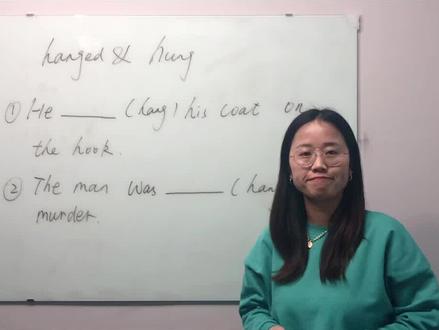 02:05查看AI文稿AI文稿
hello, everyone! 李老师又来喽!今天我们来看一个单词,这个单词的原型是横表示什么意思呢? 对,他又表示悬挂,还有表示什么?搅死,上吊,对吧?好,那哪一个表示悬挂,哪一个表示上吊呢?看两个例题哈, number one he his coat on the hook, hook 就是表示挂钩哈,他把他的外套挂在了挂钩上, right, 那么这个地方就表示什么?悬挂,悬挂。那么他用的过去式是哪一个呢? 不确定,对吧?好。第二题, the man was for murder, murder 表示谋杀,那么说明这个人因为谋杀 而背,怎么样?绞死就是除以绞形,对吧?好到这里同学们就有点蒙了,那他的过去式到底哪个表示悬挂?哪一个是表示商调呢?好,我们来。 呃,我们来看一下哈。首先我们看一下他俩的写法上的区别,我们有一个小小技巧,记住喽,看一下他这个后面,是在 这个词后面有个异地对不对?有个异地的话,我们可以说就相当于给他搬了一把椅子,给他干什么用就给他上吊用,对不对?所以像这种有椅子的,或者是说有长单词的,我们表示上吊 或者脚死,也就是处于脚型,对吧?然后另外一个,另外一个他不规则的变化就是表示 悬挂。然后到这里,答案出来了吗?第一个,他把外套挂在了钩子上,所以我们的过去实事, hum right h u n g。 第二个,因为谋杀而被除以脚型。 hunt got it。 好,这是今天的内容,再见喽!拜拜。
26武汉新文达教育 02:57查看AI文稿AI文稿
最近有人给我发来这个马克悲伤的英文句子啊,看看你能不能理解。 time flies like an arrow fruit flies like a banana 前半句是 time flies like an arrow。 这是一句著名的英文谚语,字面意思是时间像箭一样飞逝,就是时光飞逝,岁月如梭的意思。 而看到第二句时,你是不是有点懵啊?什么叫做 fluid flies like a banana? 水果像香蕉那样飞。这句话其实是作者把你给 pua 了,他用第一个句子给你制造了一个思维定式,就是 a 作为主语, flies 谓语动词 like b 作状语,意思是 a 像 b 那样飞。 如果你带着这样的思维定式,再来看第二句 fruit flies like a banana 的时候,你第一反应肯定就是水果像香蕉那样飞嘛。但很明显,这句话根本就没有逻辑嘛!所以当你再去梳理第二句的逻辑关系时,就能找到合理的断句,而真正的句意就呈现出来了。 fruit flies 作为主语表示 银, like 做谓语动词表示喜欢,而 banana 做宾语香蕉。所以句子的真正意思是果银爱香蕉,这就符合逻 记了吗?这个句子其实是英文中特别经典的,叫做语法奇异梗啊,里面的选词很巧妙, flies 既可以做复数名词表示苍蝇,又可以做第三人称单数的动词飞。而 like 既可以做介词表示像,又可以做动词表示喜欢。所以呢, fruit flies like a banana 就存在两种语法都成立的理解,但只有果淫那种理解是逻辑合理的对不 好?下面就给大家介绍一个相关的语言学概念啊, this fruit flies like a banana 这样的语法情语剧,在语言学中啊,被称为 garden path sentence 花园小近距。花园小近距啊是一种读者乍一看会诠释出错误含义,但语法其实正确无误的句型。之所以把它们称为花园小近距,是因为这些句子就好像引导读者走入花园中 曲折的小径,只读者被这个句子所欺骗和戏弄。构成这种句子的字词本身有着多重含义,导致读者一开始的认知跟句子真正要表达的含义呢,有偏差,但你只要多读几遍,就能够理解他的真实含义。而这个分析过程本身就非常有趣,所以花园小近距离经常被用在双关幽默之中啊。 举个例子,你能看得懂这个对话吗?小红说 time flies, 小明说, you can't they go too fast。 我相信大部分人看完这个对话都是这个表情, 单词都懂,但说的是个啥?相信大部分人对 time flies 的理解就是时光飞逝,这是一个主谓结构对吧? 但是 time 还可以做及物动词,表示为什么计时,比如 time how long it takes you to answer the questions, 记一下自己回答这些问题所需的时间,而 flies 前面说过了,还可以做复数名词,表示苍蝇。这样一来的话, time flies 又存在另外一种语法理解,就是动兵结果的起始句,表示给苍蝇计时。所以当小红感慨 time flies 时光飞逝的时候,小明插科打混的说了一句, you can't they go too fast? 就是故意要把 time flies 理解为给苍蝇计时,然后说你根本没法做到嘛?因为他们飞的太快了,从而制造了搞笑的氛围。好,如果你理解了,点个赞告诉我。另外再布置一道作业,你是如何理解这个句子的?
2.6万侃哥侃英语 00:33
00:33


