蓝鳍金枪鱼整条不要切是什么梗

粉丝30.7万获赞432.9万
相关视频
 15:00查看AI文稿AI文稿
yeah 官方必定 yeah。 别拍照啊。你要发毛啊?干嘛?等一下,你不要动你不要动。 嗯, 不是,我们现在就 这是今天你们拍摄的金三角的图哎,这一块油花就很漂亮, 然后三角这边一定会有一块, 看一下 这油花就很棒,密度很高。其实不是每尾鱼的三角的油都都可以让在有的你要看到明显他从这边开始大概三分之一,甚至于有的比较没有油花的都是红色的,看不到他的油啊,这整个粉白粉白哦,你按那个刀面我大概弄一下给你看啊。
1.5万一曲祭轩辕 04:28查看AI文稿AI文稿
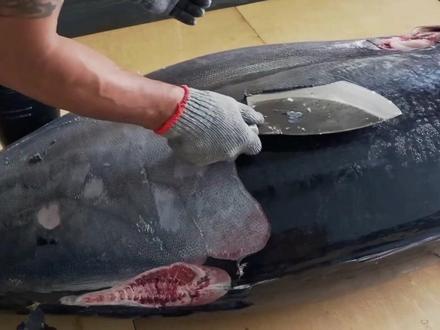
这是吃一条就能让你倾家荡产的蓝鳍金枪鱼!鱼中的劳斯莱斯因其肉质细嫩鲜美,入口即化的极致享受,深受美食爱好者的追捧,每一口都是金钱的胃口。本期视频带你看一下刚捕捞上来的蓝鳍金枪鱼 是如何切割和制作成顶级生鱼片的。这是刚刚靠岸的捕捞船,重达六百斤的蓝鳍金枪鱼从冷冻室内雕出。值得一提的是,蓝鳍金枪鱼一经捕捞上船便会被去除内脏并迅速冷冻, 以最大程度的保证金枪鱼的品质。待转移到市场内后便会进行拍卖,虽然看上去比较随意,但是拍卖的金枪鱼每一条都价值不同,并且不是所有人都可以购买的。 油脂度是衡量金枪鱼价值的一个重要标准,待挑选好后便会第一时间开始分割。只见师傅手持大砍刀,利落的 朝鱼鳃砍去,听别人说这刀是专门用炮弹壳打造的,锋利无比,不知道是不是真的,待切掉鱼鳃后,接下来便是我了, 紧接着砍去尾气和凶器,最后把金枪鱼的头部砍掉。切割蓝鳍金枪鱼必须要有顶级的侍抚才能完成, 因为失手便会失手,看似简单的刀法,其实里面大有学问,甚至在日本只有持有那种资格证书的厨师才可以上手。 现在剩下的这个大块头就是主要的部位,接下来师傅精湛的刀功绝对让你惊掉下来,过程解压又过瘾! 首先从金枪鱼的肚子部位来上一刀,然后在鱼背部和腹部的中间位置相等,随着锋利的刀刃来回的游走,金枪鱼的鱼腹肉被切了下来,这个部位也是金枪鱼最昂贵最肥美的地方, 一口破铅的金三角就在这一块肉里。待去除掉鱼腹肉的筋膜后,换上专用的刀具,先将靠近鱼尾的腹部肉切下,紧接着再从中间部位横向的来一刀,然后仔细的清理边边角角, 接下来便开始切割鱼贝肉。 怎么样?师傅行云流水的动作是不是很丝滑?而切下的鱼骨可是好东西,它里面有骨髓,吃完骨髓后还可以煲汤。而被切下来的背部肉最为健康,肉味十足,因为几乎全部是颜色暗红的瘦肉,基本大部分会做 成刺身。到此金枪鱼的分割结束,接下来便是顶级生鱼片的制作过程。蓝鳍金枪鱼各个部位的肉无论是口感、肉质还是脂肪含量都各不相同,而最为肥美的莫过于腹部肉,价格也最昂贵。 师傅目前切割的地方是金枪鱼三角腹肉,每条金枪鱼上只可取下两块,据说占整条金枪鱼肉重量的百分之三左右,脂肪丰盈成霜降状态,被称为大肥中的大肥。而现在切割的部位是上腹肉,也是没有金的部分。 接下来呈现眼前这块是金枪鱼的中副肉,脂肪适中,呈现出美丽的渐变色,既可以尝到油脂的味道,又可以感受到刺身的风味。 下面切割的是下胡肉, 待每个部位的肉细分好后,把三角腹肉一分为二,然后再从中间来上一刀,取下一块放入黑胡椒中,让黑胡椒裹满鱼身,然后放置在烤网上,点燃下面的稻草,以稻草烟熏烧至表面成熟,然后切成一厘米厚的块状, 紧接着摆放在烤盘中,采用加热烤盘烹饪的方式制作,最后浇上精心调制的铁板酱,再搭配点葱丝, 铁板三角腹肉完成。接下来便是生鱼片拼盘的制作,所采用的部位分别是赤身、中腹、 上腹、金三角,每个部位师傅都会取三到四块肉,每一块肉都会切的方方正正的。而现在呈现在眼前的是金三角肉,也是蓝鳍金枪鱼最为肥美好吃的地方,一般在高档的日料店就这么一片肉,至少要卖一千块, 待全部分割好,改好刀以后便开始摆盘。像这么一盘,剩余片拼盘在市场内的价格也不算太贵,一盘的话差不多一千三百多块,而制作的铁板三角酥肉就便宜很多了,差不多五百块,等小编的账还完,高低吃上一回。
9779多思味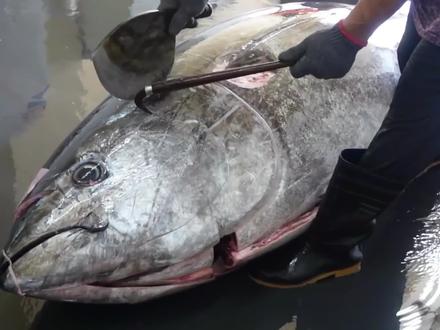 02:24查看AI文稿AI文稿
广东老板花二十八万买了一条蓝旗金枪鱼,带了大厨过来亲自接货,现场就让大厨把鱼分解。 看到大厨切割金枪鱼的刀功,我觉得这刀功比金枪鱼值钱。这条金枪鱼重五百斤,刚上岸老板就让大厨着手切割分解, 主要是因为太大了,运输上台台运运不方便,切割分解好了就容易弄回去了,反正在哪里都是要切割分解的,索性就让大厨在这里切割分解好再带回去。 这大厨处理起金枪鱼来非常厉害,纸皮薄的鱼皮削了还不伤鱼肉,砍完鱼尾砍鱼头, 大刀挥几下,鱼头就砍下来了。好锋利的大刀,切鱼如同切豆腐 鱼,凶奇归鱼凶奇,鱼头归鱼头, 鱼颈肉归鱼颈肉,每个部位分的明明白白。这个金枪鱼各个部位被他的大刀一个一个 巧妙的切割下来,这切割技巧看着就过瘾,锋利的刀加上这切割技巧,真是太完美了。 看这样的大厨,切割分解大鱼就是一种享受。这刀功比鱼值钱, 估计大厨的年薪也不低。 分界完成改小块, 这一刀刀下去,切割的声音太上头舒服。
5.3万吃货走天下美食记 01:03
01:03 04:27查看AI文稿AI文稿
now i'm gonna remove the thicker line which is the belly line so the belly frame known as a harahida in japanese is actually very underly live in cooking lot of restaurants actually don't use it when i was working for fish companies i just realized so many belly things were being discovered and i started to making a brush he had a really nice collagen so i saved it it was really delicious i'm going to do the same process as with the buckling the first thing is always to cut the skin to make an entrance for the cutout the belly is much hotter because it has the strong ribs attached to it the backline is much easier because if you do it right the meat will come off very easily but a belly loin it's hard to see the shape of the ribs because it's covered with the skin of the stomach like you see here i always tell people it's important to cut where you see that's why i cut at eye level and the knife should always be close to eye level instead of guessing i'm cutting the strong bones that separate the back and the belly you could cut the bones that i'm cutting right now from the other side but it's really hard to see because of the meat that's in front of you so i'm trying to make it easy by just looking at it and i'm cutting it that's why i turn the fish over one time this piece will come off where the bones still attached and it's much easier to take the bones off once it's on the cutting board i'm gonna come back later to remove the bones attached to the bloodline and then also the ribs attached to the belly now i'm going to do the exactly same current process again but from the bottom some people put the bones the other way, but i personally prefer it this way because i can see where my knife is to the bone the result is always better because you know exactly how your knife is performing i'm just cutting the meat underneath the bone this way it's much easier because i can have really good control of where my knife is and then i can have my left hand to hold it so the grip is much better here i'm going to start peeling the seniors that are connected to each marrow in the spine i'm going to use my deva to cut the seniors then lift the bones as i move forward to the head tuna bones are very easy to break because they are not all connected each bone they are connected with almost like a frame or skin that has a college in it so that's easy to tear last part i'm cutting is the neck and also the top of the rib which is very hard so i'm using my devil to chop through the bones later, i'm gonna come back and scrape all the meats left on the bone here i just separated the backline and the belly loin the bones that are between the bot line i just put my knife right next to it then just cut straight down now go my order she is finished this is the breakdown of the tuna i have four loins two buckling two bellies and one set of bones you also have one belly thing and two colors now i'm going to break down one belly loan into tucker blocks i'm now removing the ribs from the belly this is much easier to do once the loin is on the cutting board like this i'm just bringing my knife right next to the bones that there's a less waste with a meat and just cutting straight down and then i separate the skin almost like a sheet of the bone is removed this is just the next part that's part of the bone that i was removing just removing one big piece of bone now i'm skimming the ribs and then the skin of the stomach and trying to separate them from the belly loin trying to leave as little meat as possible on the ribs so nothing is wasted cutting a whole fish makes you feel that it's taken a long time but it is important to take a time and do one bone, one seen you and one muscle at a time you have to be very careful you're not going to penetrate the meat that you're not supposed to and also you're keeping the cutting board and environment very clean now i'm removing the belly known as the zabutong the avatong is usually the funniest part of the tuna that is where we get tutoro and then the turtle the rest of the meat is known as are coming。
31凯康果蔬保鲜包装


猜你喜欢
最新视频
- 2427Zj