todo和doing有什么区别
相关视频
 01:02查看AI文稿AI文稿
有的同学动词后边到底是加 to do 还是读音,现在倒都不明白,对吧?老师帮你捋一下,一捋就清楚。 to do 是不定事,那叫不定事,就是不确定的事还没有发生,标目的和将来, 能理解了吗?用土读读应是动名词,表示的是这件事是已经发生的,过程已经发生了。那有的同学就说了,为嘛有的动词后边也能跟土读,也能跟读应?第十一句话很简单,同学们永远记住了, 土豆是还没有做,而 doing 是已经做。我举个例子, remember to do something 就是我记得去做还没做的事情。用 to do, 那么 remember doing something 就是我记得已经做过的事情。 okay, 好,我出道题决定做某事,是用 decide to do something 还是 decide doing something 告诉我。
27.2万津南二哥 01:15查看AI文稿AI文稿
动词开头用原形 do, to do 还是 doing? 只需看动词的数量。如果动词数量等于一,那我们就用动词原形 do。 这其实是一个起始句。 比如说第一句吃一个鸡蛋,句子中只有一个动词 eat, 所以我们用动词原形 eat eat an egg。 这是一个起始句。如果动词数量大于一,就用 doing doing 做主语。比如说第二句吃鸡蛋对我们有好处。这句话有两个动词 eat 和 eat, 所以用 doing, 也就是 eating eating eggs 做主语。因为 it 前面是主语部分,只有名词或者具有名词性的词组才能做主语,这就需要让 it 具有名词性,所以 变成 eating eating eggs is good for us。 如果动词数量大于一,并且后面跟一个句子,就用 to do。 为了吃鸡蛋,我买了一只母鸡。那前面就是表目的为了吃鸡蛋,我才去买一只母鸡。所以用 to do to eat eggs i bought a hand。 你都记住了吗?点个赞吧!
3017英语飞飞老师 00:34查看AI文稿AI文稿
土 do 和土 doing 有什么区别呢?土 do 是不定式,后面的 do 代表的是动词原形,土 doing 是介词引导的介词短语,所以兔后面只能跟名词。如果你非得要加一个动词,就必须把这个动词改成动名词, 所以兔后面是 doing。 问题的关键就在于兔是介词还是不定式,那么怎么分辨呢?首先你要记住这两个经典的短语,保证你在考试当中不出错。 look forward to pay attention to 这两个短语当中的 to 都是介词,如果后面要跟动词的话,一定要把动词转换成动名词形式。
8894英语范老师 00:41查看AI文稿AI文稿
to do 和 doing 都是非谓语动词的形式,那他们做主语的时候有什么区别呢? to do 侧重于表示一次性的动作。 to win the first prize in the game it's difficult。 赢得比赛的第一名是困难的。 这里的 to win 就是一次性的动作。而 doing 呢,表示经常习惯性的动作。 swimming is my favorite sports。 游泳是我喜欢的运动, 俗名是经常习惯的动作。如果主语和表语都是非谓语动词,那么形式上要保持一致。比如说 singing is believing to see is too belief。
90Vi姐带你升本 01:37查看AI文稿AI文稿
雪梨老师,动词后用 to do 还是 doing 呢?哎,这个知识点经常要考,你是不是都在死记硬背,固定搭配,都不知道为什么?那这样英语肯定学不好, 以前英语老师没教过你这些方法。那今天雪梨老师带你三个字,搞定,就是做没做,没做就用 to do, 做了就用 doing。 怎么来理解?首先你要知道 to do 它是不定式,也就是不确定的事。什么是不确定的,将来还没有做的事情?所以 to do 表示目的和将来。 比如说我想做某件事,这件事我还没有去做,所以用 to do。 比如我想去睡觉, i want to sleep。 而动名词 doing 是把一个动作变成了一件事情,强调做这件事情的过程, 比如我享受做某件事情,我不可能享受没有做过的呀。所以呢,用 doing。 比如我喜欢唱歌, i enjoy singing。 那有同学会发现,为什么有的动词后面可以加 to do, 也可以加 doing? 那其实按字面意思理解就很简单了,比如说忘记 forget。 如果你是忘记了还没做的,是要做的事情,就是 forget to do something 比如说我忘记了关门 i forget to close the door。 那如果是忘记了已经做过的事情,就是 forget doing something i forget closing the door。 你学会了吗?学会了,给老师一颗小心心吧!
2.6万英语雪梨老师(早8:00直播)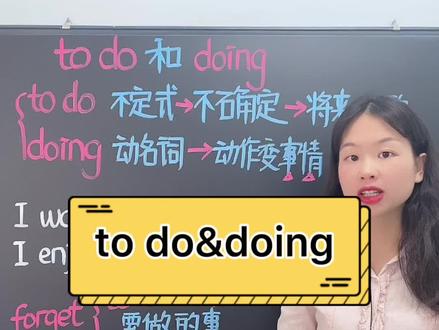 01:34查看AI文稿AI文稿
动词后加 to do 还是 doing 呢?我们来看一下 to do 它是不定式。什么是不定式呢?不定就是不确定,什么事是不确定的呢?就是将来的事,所以 to do 它表示将来目的。 来看个例子, i want to dance, 我想跳舞,那么跳舞这件事情呢?只是我想想而已,还没有去做的,它是将来的事情,而 doing 它是动名词, 动名,动名就是动词,名词化了,把动作变成事情,他强调的是事情,比如说 i enjoy dancing, 我享受跳舞。那么这 这个时候呢?我强调的是跳舞这件事情,那为什么 enjoy 后面不用 to do 呢?因为我们享受的事情肯定是已经做过的事情,如果没有做的事情,我们谈不上是享受。 那有些动词它后面既可以用 to do, 也可以用 doing, 比如说 forget 忘记 forget, to do something 忘记要去做的事情,那么这件事情呢?是还没有去做的,因为 to do 表示将来,而 forget, doing something 是已经做过的事情。
702英语老师书其 01:56查看AI文稿AI文稿
to do doing and do what's the difference well sometimes to do is just adding a verb if you have two verbs add to like i want to eat or i want to learn english but sometimes it's the reason i go out to walk that's the reason you go out or i go to school to learn english that's the reason you go to school but what about doing go out walking that just sounds like you go out and walking are happening at the same time like when you're going out you're also walking like i go to school walking with my friends but and do sounds like you're doing two different things maybe at different times like i go out and walk or i go to school and learn that just sounds like you're doing two things maybe at the same time maybe not you could even use them all together i go to school walking with my friends i went there to learn but the teacher was really bad so i went to school and and learned nothing so there you go to do is often the reason doing is just two things happening at the same time and and do is just adding another thing that you do there you go。
1641大胡子老师Jesse


